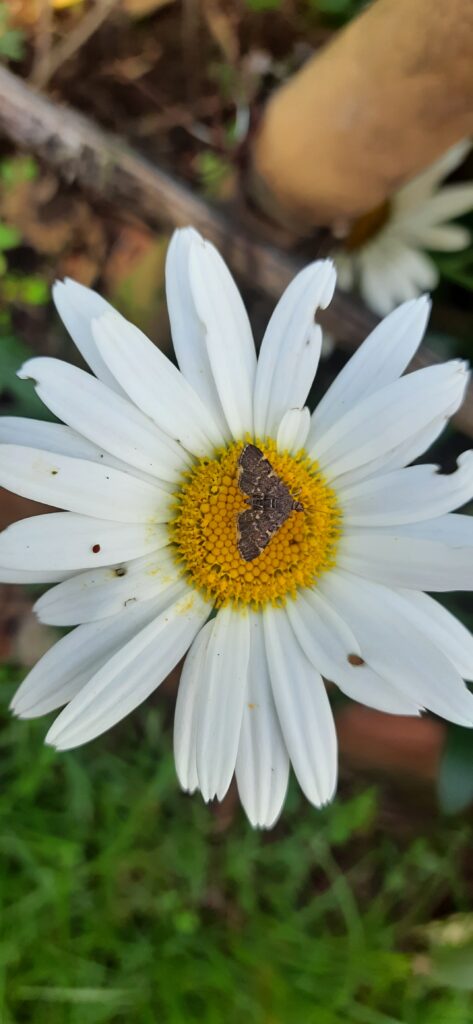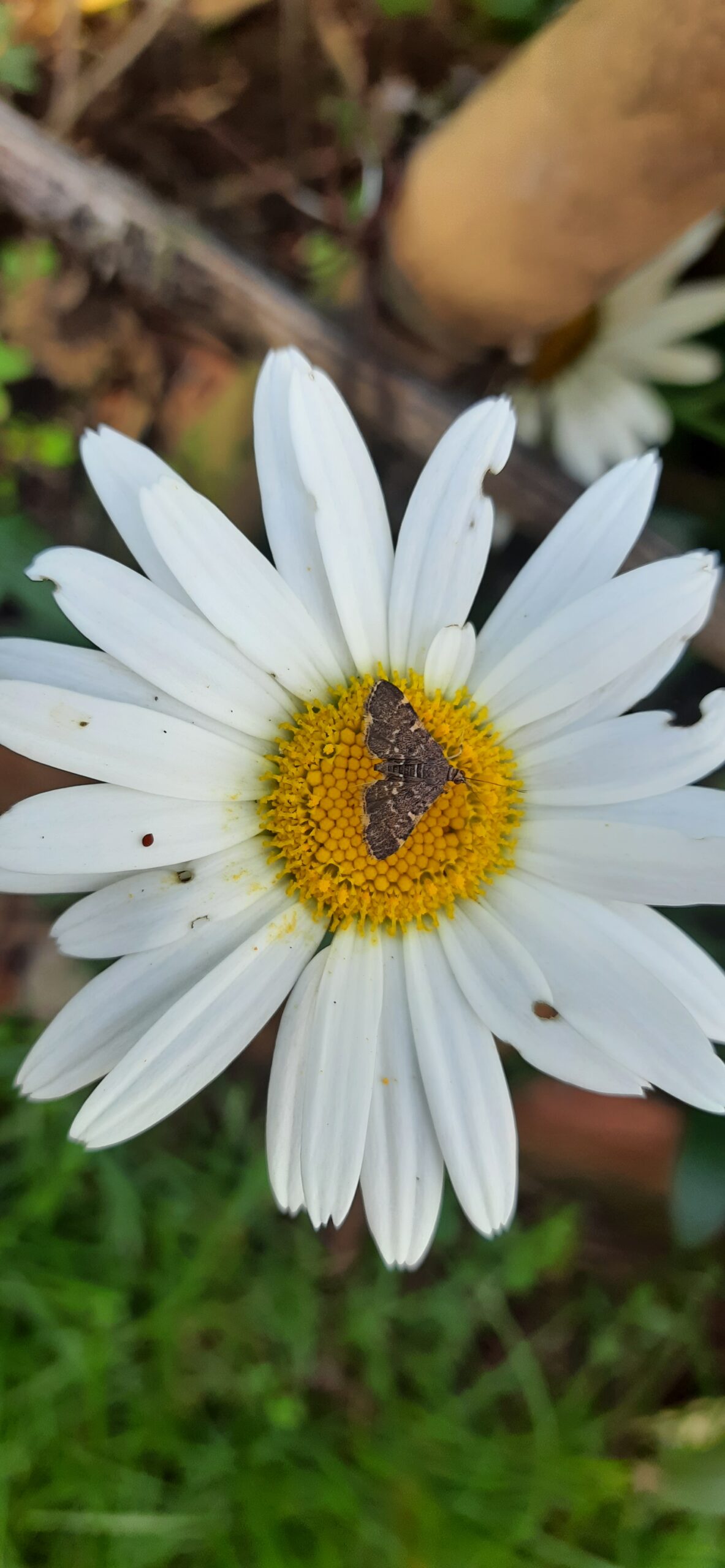
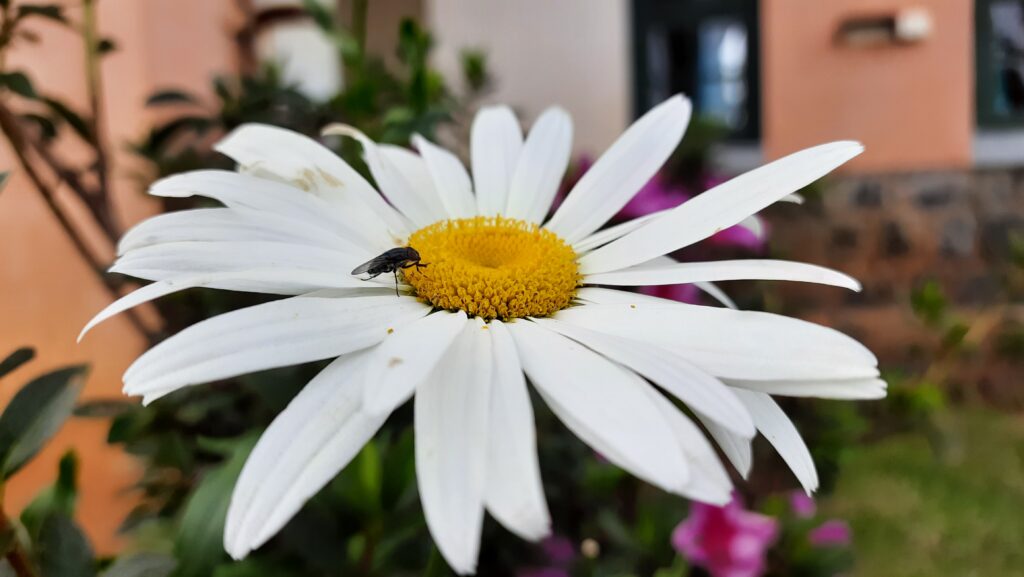
Keystone campus has a wide variety of plants on both native and exotic species. Flowering of these during their season is beautiful to admire and soothing to the eyes. I happened to see the Oxyeye daisy (Chrysanthemum leucanthemum) in flower while strolling down the campus after lunch. It belongs to the Astereaceae (Aster) family. The flowers are characterized by a head with a mixture of central disk flowers and peripheral ray flowers. Oxeye daisy is a pretty little perennial flower though it is an introduced species from the European region. It thrives in a wide range of conditions but prefers a sunny or part-sun location and average soil that is damp for it to grow. It has flowers through the year and I have not seen any large animals, especially the Gaur foraging on it. The flower has an unpleasant odour especially when cut or crushed. The unpleasant odor is reminiscent of stale perspiration. Medicinally, the whole plant is used for treating whooping cough, asthma, conjunctivitis, bruises, and wounds. An acrid juice permeates from the flowers of Oxeye daisies and is said to repel insects. Maybe that is the reason making it unpalatable for any animal to graze on. The unpleasant odor of the flowers is similar to that of many other species pollinated by flies. I found it interesting to observe the flower because it had many insects visiting the flowers. For a couple of days after lunch I would sit beside the flower observing any insects visiting the flowers and taking pictures of the insects. Here is a list I put together of visitors having a feast of nectar and pollen in spite of the strong unpleasant odour. I was not able to find bees on it though; maybe spending more observation time would help in bringing a more diverse forager list.
Red Pierrot (Talicada nyseus): It was one of the commonly seen butterflies, observed collecting nectar from the f lower. It is a low flying butterfly active during dawn and dusk.
Hoverflies (Syrphidae): As the name suggests, they are often seen hovering or nectaring on flowers; the adults of many species feed mainly on nectar and pollen and are important pollinators.
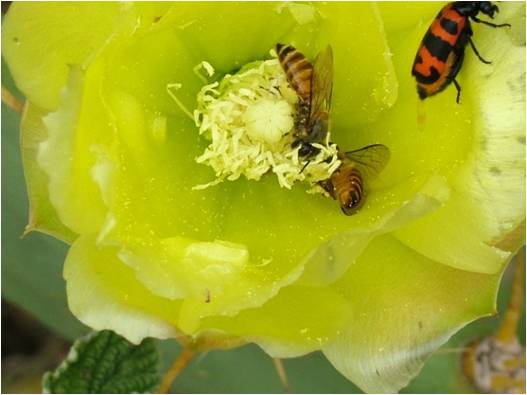
Sweat bees (Halictidae): They usually build nests in rotting woods and underground.
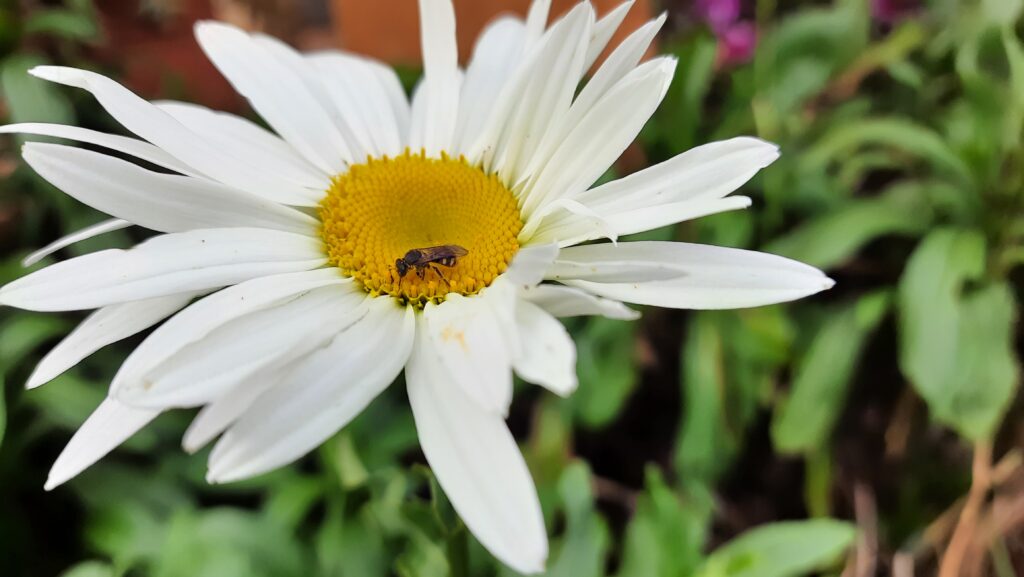
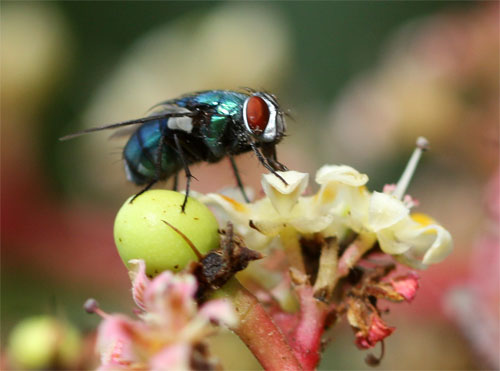
Blowflies (Stomorhina sp.) – Belonging to the Rhiniidae family, it is found to feed nectar and pollen from flowers. These distinctive, medium-sized blowflies are rather similar to the house f lies, but they have a characteristic prominent proboscis, a longitudinally striped thorax and an abdomen with yellow and black bands. The tubular proboscis aids in sucking the nectar.
Jumper spider (Salticidae): They are active hunters or predators. They spend more time scanning their surroundings from one position, actively stalking any prey they detect.
Ant (Formicidae): The ant had a thin, linear shaped body feeding on nectar from the flowers.
Text and Image credit: Shiny Mariam Rehel
Insect identification: Poornima Viswanathan