The most common pollinators discussed are generally bees and butterflies. While they are major pollinators, it is important to consider other pollinators that are also vital to different ecosystems. While bees contribute in a big way to crop production and plant reproduction, other pollinators, like birds, are crucial in their own ways. In fact, there is a specific word for pollination carried out by birds: ornithophily! Nectar-feeding birds like hummingbirds and sunbirds are considered to be key pollinators in areas with lower insect populations. Some pollinator birds in South India include the Purple-rumped Sunbird, Loten’s Sunbird, and the Crimson-backed Sunbird. Flowers pollinated by birds are generally brightly colored rather than heavily scented. This is probably because birds do not have a highly developed sense of smell. Some barbets and drongos are also known to be nectar-feeding pollinators. Specifically within the Nilgiri Biosphere Reserve the Nilgiri flowerpecker and the Nilgiri laughingthrush are known to feed on nectar.

Bats have also been known to pollinate certain flowers. The pollination of flowers by bats is called chiropterophily. Over 500 plant species rely on bats for pollination, including banana, mango, guava and agave. The flowers pollinated by bats generally have pale nocturnal flowers. While these plants rely on bats for pollination, bats rely on fruits from these plants for survival. Indian fruit bats have been seen in Coonoor, within the Nilgiris and are thought to be migratory.
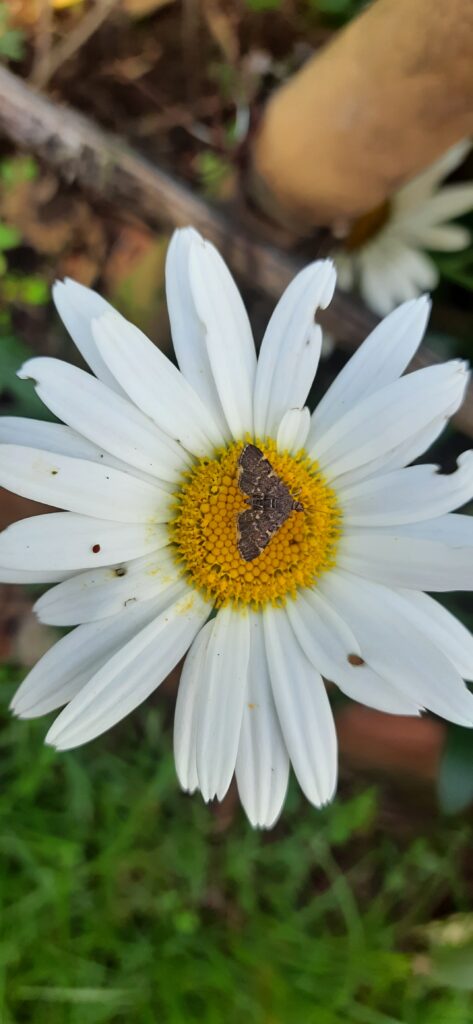
Like bats, moths too are nocturnal pollinators. Pale or white flowers with heavy scents and large amounts of nectar attract them. Flowers visited by moths are typically found in clusters and provide landing platforms. They open in the late afternoon or at night. Some examples of these flowers in India are moonflowers, morning glory, and datura.

White-lined sphinx moth (Hyles lineata)
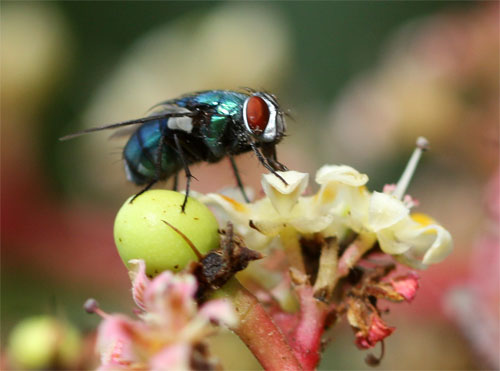
Though often overlooked, flies are important pollinators. Flies are one of the most diverse groups in the world that exist in a broad variety of habitats. Flies can be as efficient as (or better than) bees for pollinating some crops, and are often responsible for transporting high pollen loads in both natural and modified systems. Flowers pollinated by flies are generally pale and dull. They can also have putrid scents to attract flies like rotting meat, dung, humus, sap and blood. Flies play a significant role in pollinating crops like cocoa, mangoes and apples.
Lizards and geckos are also known as pollinators, generally on islands. Some people have attributed this to their ability to expand their diet to nectar, pollen and fruit due to a larger population size with a lower number of predators.

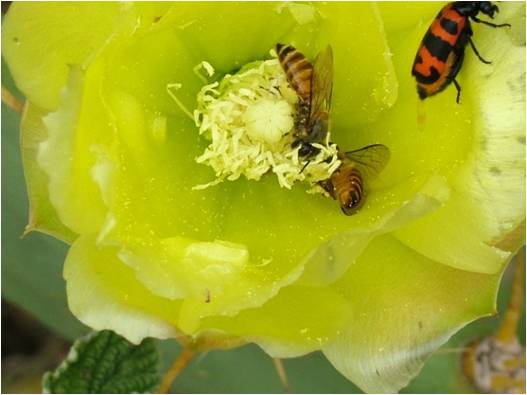
Wasps are known to pollinate flowers like figs and orchids. When wasps feed on nectar, pollen sticks to their bodies and pollinate the other flowers they feed on. Due to their smoother bodies they are considered less efficient pollinators than bees, but are nevertheless crucial to many plant species. Ants act as pollinators as well, though their efficiency appears to be limited compared to the others we have looked at. They are likely to consume nectar without cross-pollinating as they crawl in and out of flowers. Flowers visited by ants are generally low growing, inconspicuous and close to the stem.

A species of potter wasp on aster.
Another interesting group of pollinators are spiders. Some spider species like jumping spiders and crab spiders lie in wait for their prey in and around flowers. By doing so they inadvertently assist in pollination. This is known as predatophily and has been observed within the Western Ghats in species of Impatiens, Sonerila and Strobilanthes. In the same plants, predatophily has been observed in frogs and toads as well. Slugs and snails are also pollinators of certain flowers, though they are not well known or widespread. Pollination by snails and slugs is called malacophily. Snails tend to pollinate flowers like morning glory and can be important pollinators in the rainy season.
Therophily is pollination by non-flying mammals, which includes rodents, marsupials and primates. Primate pollinated flowers tend to be unscented and very large, marsupial pollinated flowers are typically in the canopy, and flowers pollinated by rodents are generally at ground level and can be smelly. Primate nectar feeding and cross pollination is well-acknowledged today and include lemurs and bush babies. Lemurs are observed as unique pollinators especially in Madagascar. Marsupials like the honey possum in Australia are pollinators and are the only flightless animal that feeds exclusively on nectar and pollen. Another marsupial pollinator is the sugar glider. Sugar gliders have a flexible diet which includes pollen and nectar. They are important pollinators of native Australian species. Rodents like mice, gerbils, rats and shrews have been known to visit and pollinate flowers. Since rodents are largely nocturnal, it is quite possible that their contribution to pollination is currently underestimated due to lack of observation.
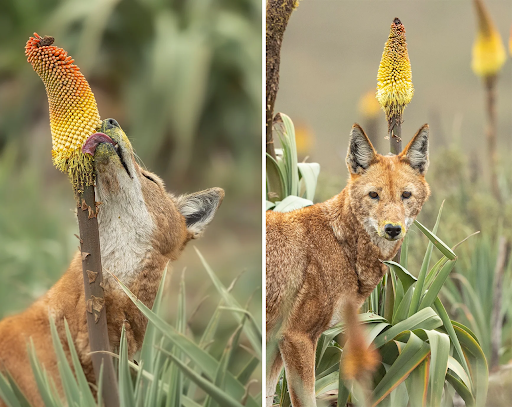
One of the most fascinating pollinators has been observed in Ethiopia. These are the nectar-eating Ethiopian wolves. These wolves have been seen consuming nectar from a local flower called the Ethiopian red hot poker. These wolves have been seen foraging on the flowers for considerable periods of time, sometimes covering even 30 flowers consecutively! The nectar of this flower is also popular among children in the region. This behaviour allows these plants to be cross-pollinated, as their snouts become yellow with pollen from each flower and is carried to the next.

Blog by: Ammer Pannu, Intern at Keystone Foundation (July 2025)